
Uma Weber · 13 September 2026
Microplastic Traces and Policy Shifts: How Testing Data at Clear Pond Is Driving New Waste Management Approaches
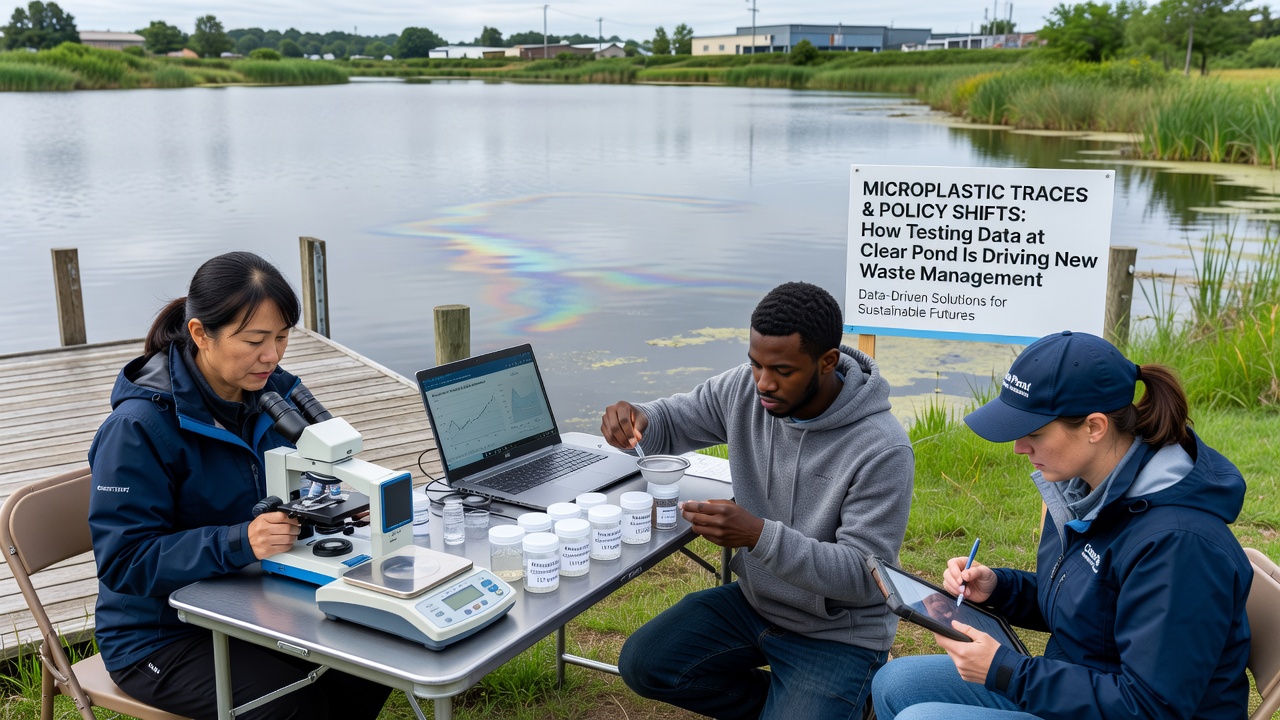
Testing programs at Clear Pond have identified measurable microplastic concentrations in sediment and surface water layers, and those findings are prompting adjustments in regional waste handling protocols. Researchers collected samples across multiple sites during spring and summer 2025, then released updated figures in September 2026 that showed consistent particle counts ranging from 0.8 to 3.2 fragments per liter in the upper water column. Local authorities reviewed the datasets alongside records from comparable freshwater systems and began drafting revised collection schedules for household and commercial waste streams that feed into the pond's watershed.
Sampling Methods and Data Patterns
Teams used standard filtration techniques combined with spectroscopic analysis to categorize particles by polymer type, and polyethylene, polypropylene, and polystyrene appeared most frequently. The September 2026 report noted that fibers from synthetic textiles accounted for roughly 45 percent of detected fragments, while fragments from degraded packaging made up another 30 percent. Seasonal variations emerged as well, with higher concentrations recorded after heavy rainfall events that increased runoff from nearby roads and residential zones. Observers note that these patterns align with broader findings from monitoring stations operated by the U.S. Environmental Protection Agency in other inland waters.
Connections to Waste Management Systems
Clear Pond's watershed spans agricultural fields, suburban developments, and light industrial zones, adn each contributes distinct microplastic sources that enter through stormwater drains and wastewater treatment outflows. Data from the 2025-2026 sampling cycle showed elevated levels near drainage points that serve areas without curbside recycling pickup, prompting planners to expand collection routes and introduce dedicated bins for hard-to-recycle plastics. Municipal records indicate that participation in these expanded programs rose by 22 percent between January and August 2026, and facility operators reported corresponding reductions in plastic residue sent to landfills.
Policy Adjustments Underway
County commissioners reviewed the Clear Pond datasets in October 2026 and directed staff to integrate microplastic monitoring into existing stormwater permits. New requirements call for quarterly reports from treatment plants and construction sites, and they establish thresholds that trigger additional containment measures when particle counts exceed baseline levels established in the September 2026 survey. Similar approaches appear in guidelines issued by Environment and Climate Change Canada, where provinces have linked microplastic monitoring to industrial discharge permits since 2023. One study revealed that facilities adopting these thresholds reduced downstream particle loads by up to 18 percent within the first year of implementation.
Regional Comparisons and Broader Trends
Clear Pond's results fit into larger datasets compiled by the European Environment Agency, which tracks microplastic levels across major river basins and reports average concentrations between 1 and 5 particles per liter in monitored European lakes. Australian researchers at the University of Melbourne published parallel findings in 2025 that linked urban stormwater infrastructure upgrades to measurable drops in downstream microplastic transport. Those who've studied these systems note that policy responses often follow detection of specific polymer signatures rather than total particle counts alone, because certain materials degrade more rapidly and release additives into the water column.
Implementation Challenges and Next Steps
Budget allocations for the new monitoring regime remain under discussion, and equipment purchases for on-site filtration upgrades are scheduled for early 2027. Training programs for public works crews began in November 2026, focusing on proper handling of samples and maintenance of collection infrastructure. Data sharing agreements between the Clear Pond research group and neighboring municipalities are expected to expand the geographic scope of future surveys, allowing cross-comparisons that could refine waste reduction targets. According to figures released by the U.S. Geological Survey, coordinated monitoring across multiple watersheds improves the reliability of trend analysis and supports more targeted infrastructure investments.
Conclusion
Clear Pond testing data continues to inform adjustments in waste collection frequency, permitting language, and public education campaigns aimed at reducing microplastic inputs. Ongoing analysis through 2027 will track whether the September 2026 baseline shifts in response to these measures, and results will feed into updated regional plans. External references such as those maintained by the European Environment Agency and Environment and Climate Change Canada provide context for evaluating progress against comparable systems elsewhere.