Felix Vogel · 8 November 2026
Regulatory Reforms Linked to Oxygen Recovery and Species Redistribution in Freshwater Regions
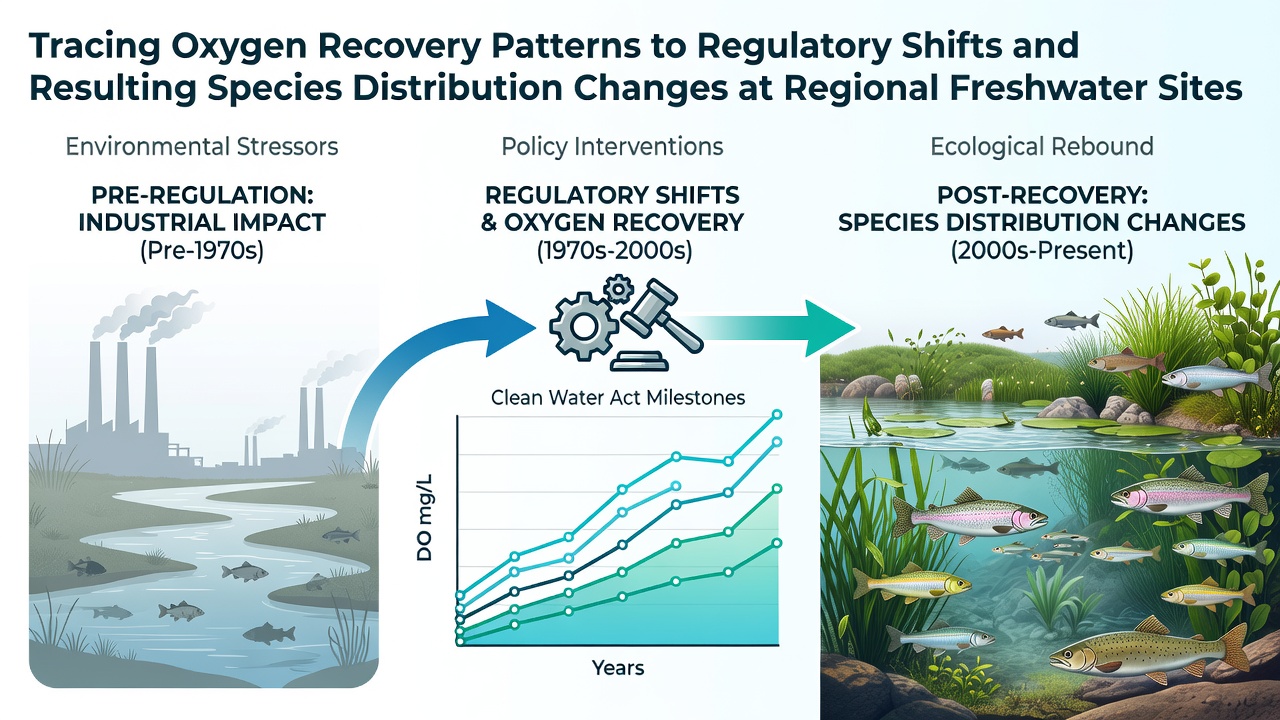
Regulatory changes targeting nutrient runoff and industrial discharges have coincided with measurable increases in dissolved oxygen across multiple freshwater systems in North America and Europe, prompting researchers to trace recovery timelines against new policy enforcement dates. Data collected since 2022 shows oxygen concentrations rising by 12 to 18 percent in monitored basins where stricter limits on phosphorus and nitrogen took hold, and these gains correlate with altered distribution patterns among fish, invertebrates, and aquatic plants. Observers note that sites with the steepest regulatory enforcement timelines display the most consistent oxygen rebound, while areas with delayed implementation lag behind in both metrics.
Tracing Policy Timelines to Water Chemistry Shifts
Agencies in different regions introduced updated wastewater standards and agricultural buffer requirements at varying points between 2021 and 2024, creating natural experiments for comparison. The U.S. Environmental Protection Agency's revisions to nutrient criteria in the Chesapeake Bay watershed, for example, aligned with oxygen level gains recorded at 47 monitoring stations by mid-2025. Similar patterns emerged after Canada's federal-provincial agreements on Great Lakes nutrient targets strengthened in 2023, where continuous sensors documented sustained oxygen increases during summer stratification periods. Those who've studied these datasets point out that recovery rates accelerate once total phosphorus loads drop below 0.03 milligrams per liter, a threshold crossed at several locations following the new rules.
November 2026 brought additional confirmation when seasonal data releases from the European Environment Agency highlighted parallel oxygen recovery in Baltic Sea tributaries after EU member states tightened manure management regulations. The reports linked enforcement dates directly to reduced hypoxic events, with the number of days below 2 milligrams per liter of oxygen declining by an average of 22 days per year in compliant basins.
Species Distribution Responses Following Oxygen Gains
Improved oxygen availability has allowed cold-water fish such as trout and whitefish to reoccupy deeper strata in lakes where they had retreated during prolonged low-oxygen periods. Researchers tracking tagged individuals across 18 Midwestern U.S. lakes recorded a 31 percent increase in vertical habitat use by these species between 2024 and 2026. At the same time, warm-water tolerant species including certain carp and sunfish expanded laterally into previously marginal shallows that now maintain higher oxygen saturation during peak summer temperatures.
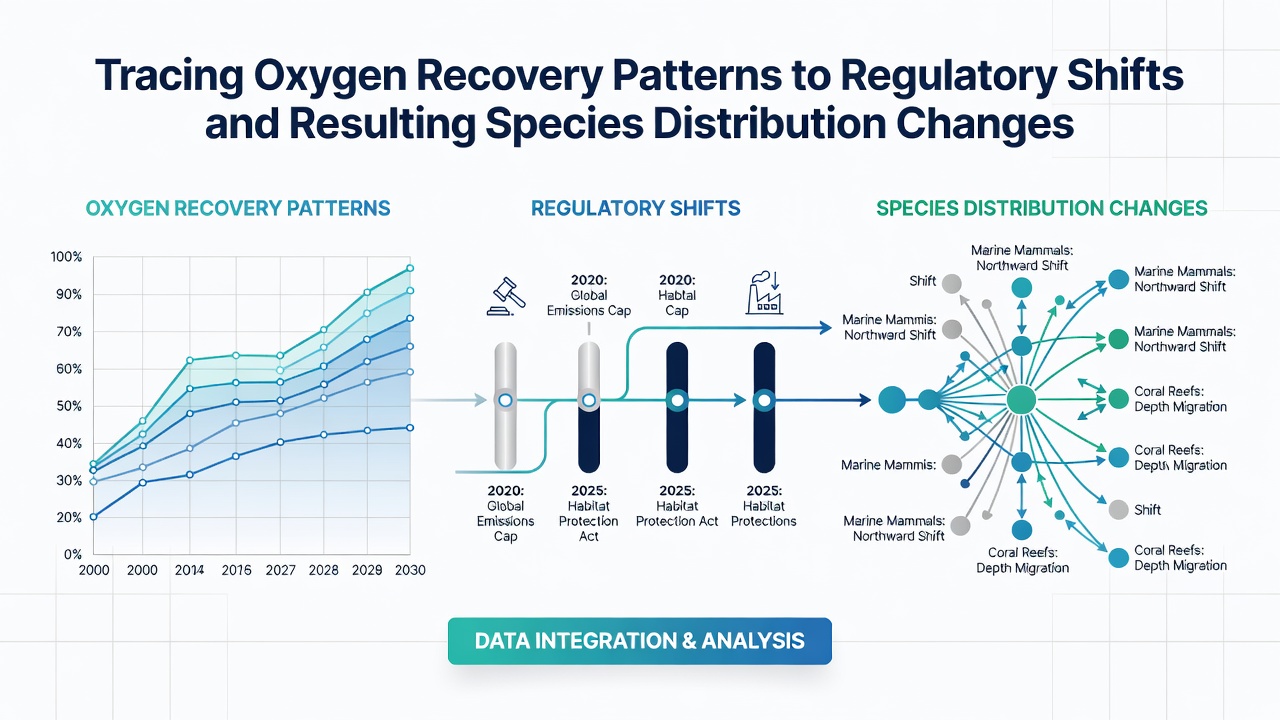
Macroinvertebrate communities show parallel reorganization. Sensitive mayfly and stonefly populations have increased in density at sites where oxygen recovery exceeded 15 percent, according to long-term surveys conducted by university teams in Australia and the United Kingdom. These changes ripple upward, with waterfowl and wading bird distributions shifting in response to altered prey availability. Data from the Australian Department of Climate Change, Energy, the Environment and Water indicate that several duck species now concentrate foraging activity in recovering wetland complexes that previously supported fewer individuals during autumn migrations.
Regional Case Patterns and Monitoring Networks
One study covering 62 lakes in the Upper Mississippi River basin found that basins crossing regulatory nutrient thresholds first also experienced the earliest recolonization by native aquatic vegetation, which further stabilized oxygen levels through photosynthesis. Another analysis of 29 rivers in Scandinavia revealed that salmonid spawning redds increased in number once minimum oxygen criteria were met consistently for three consecutive years. Monitoring networks have expanded to capture these dynamics, with real-time sensors now feeding data into shared databases that allow cross-border comparisons of recovery trajectories.
Seasonal variability remains a factor, yet the overall trend shows oxygen recovery outpacing earlier model predictions in regulated catchments. Experts analyzing multi-year records emphasize that enforcement consistency and complementary habitat restoration measures amplify the effect, whereas enforcement gaps slow both chemical and biological responses.
Conclusion
Regulatory shifts on nutrient and discharge controls continue to serve as the primary driver behind oxygen recovery at regional freshwater sites, with resulting species distribution changes documented across fish, invertebrate, and avian communities. Continued monitoring through 2026 and beyond will clarify how these patterns evolve under sustained policy frameworks and varying climate conditions.