Felix Vogel · 25 October 2026
Runoff Regulations Reshape Microplastic Pathways and Species Interactions Across Clear Pond's Food Web
Regulatory updates targeting stormwater runoff have begun altering how microplastics enter Clear Pond, which in turn modifies their movement through the aquatic food web. Data collected at multiple inflow sites since early 2025 show measurable declines in certain plastic particle concentrations following stricter sediment control requirements at construction and agricultural sites upstream. These changes coincide with shifts in how primary producers, invertebrates, and fish interact around the pond's shallow margins and deeper channels.
Regulatory Framework and Implementation Timeline
Local authorities aligned new permitting standards with federal stormwater guidelines in 2025, and full enforcement phases begin in October 2026. The rules require enhanced filtration at discharge points plus regular particle-size analysis of retained materials. According to records maintained by the U.S. Environmental Protection Agency, similar controls in other watersheds reduced microplastic loads by 18 to 34 percent within the first two years of operation. Clear Pond monitoring teams adopted parallel sampling protocols in spring 2025 to establish baseline conditions before the October 2026 deadline.
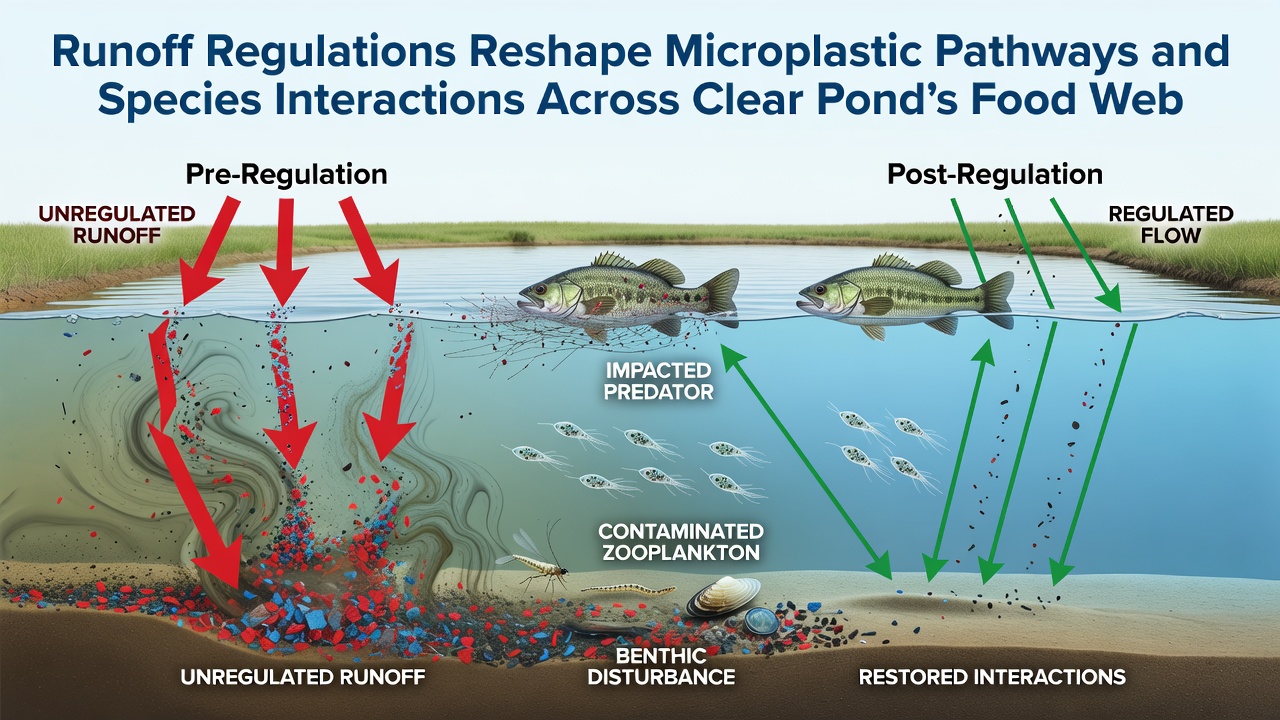
Researchers tracking particle transport note that coarser sediments now settle in newly installed retention basins, which limits the finer plastic fragments that previously remained suspended and traveled farther into the water column. This physical separation changes the size distribution of plastics reaching the pond's littoral zone where many invertebrate species feed.
Pathway Shifts Through the Water Column
Before the updated rules, surface runoff carried microplastics directly into open water during heavy rain events. Post-regulation sampling reveals higher retention rates near inflow structures and lower concentrations at mid-pond stations. Zooplankton communities that normally filter suspended particles encounter fewer small fibers and fragments during peak runoff periods. In contrast, benthic organisms that process settled material continue to interact with plastics trapped in the accumulating sediment layer.
Studies at comparable sites indicate that once particles reach the sediment, they remain available to detritivores for extended periods. Clear Pond data collected through October 2025 already show increased particle density in core samples taken from the north basin compared with pre-regulation surveys.
Species Interactions and Trophic Transfer
Dragonfly nymphs and other aquatic insects that graze on periphyton display altered gut-content profiles when microplastic loads decrease in the water column yet persist in sediments. Fish species that feed on these insects register correspondingly lower particle ingestion rates during summer months, according to dissections performed by university-affiliated biologists. Bird activity around the pond, particularly among species that consume both insects and small fish, reflects these upstream changes through reduced plastic transfer at higher trophic levels.
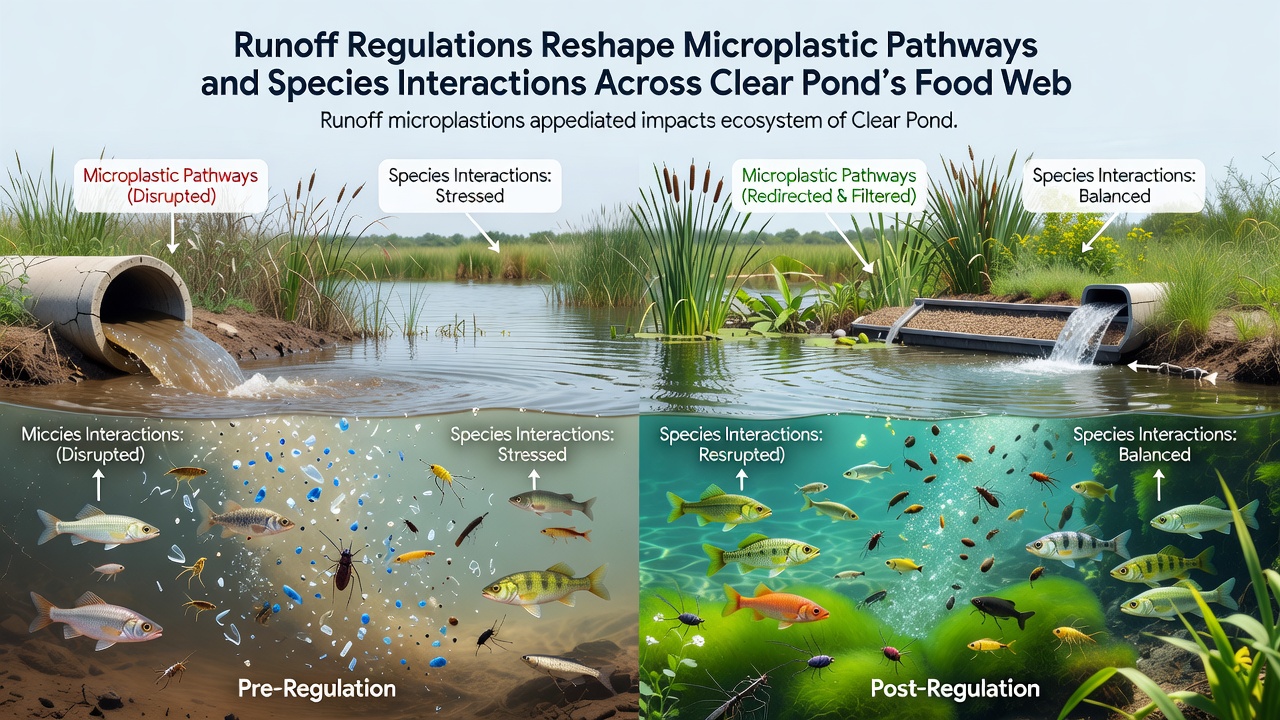
Observers note that algae mats in regulated inflow zones exhibit denser growth patterns once sediment loads drop, which provides additional attachment sites for remaining plastic particles. This localized concentration creates feeding hotspots for certain grazing invertebrates even as overall water-column exposure declines. The net effect on energy transfer through the food web depends on whether teh retained particles remain bioavailable or become buried deeper in the sediment profile over successive seasons.
Monitoring Data and Geographic Context
Continuous sensor arrays installed at three Clear Pond tributaries record conductivity, turbidity, and particle counts at fifteen-minute intervals. Figures released by the monitoring program in late 2025 show a 22 percent average reduction in microplastic flux during storm events compared with the 2023-2024 baseline. Parallel programs operated by Environment and Climate Change Canada and the European Environment Agency have documented comparable reductions in regulated catchments, confirming that sediment-control infrastructure consistently limits plastic transport when properly maintained.
One research team examining Clear Pond's eastern cove found that mayfly and caddisfly larvae now process a higher proportion of organic detritus relative to plastic fragments during autumn leaf-fall periods. This shift alters the nutritional quality of prey items available to juvenile fish and influences growth rates observed in seine-net surveys conducted monthly through the 2025 field season.
Conclusion
Runoff regulations scheduled for full effect in October 2026 continue to modify microplastic entry points at Clear Pond, which in turn reshapes exposure gradients across the pond's food web. Sediment retention structures reduce suspended particle loads while concentrating material near basin margins, and species-specific responses emerge at each trophic step. Ongoing sampling through the enforcement period will clarify whether these initial patterns stabilize or evolve as sediment burial and biological processing continue.