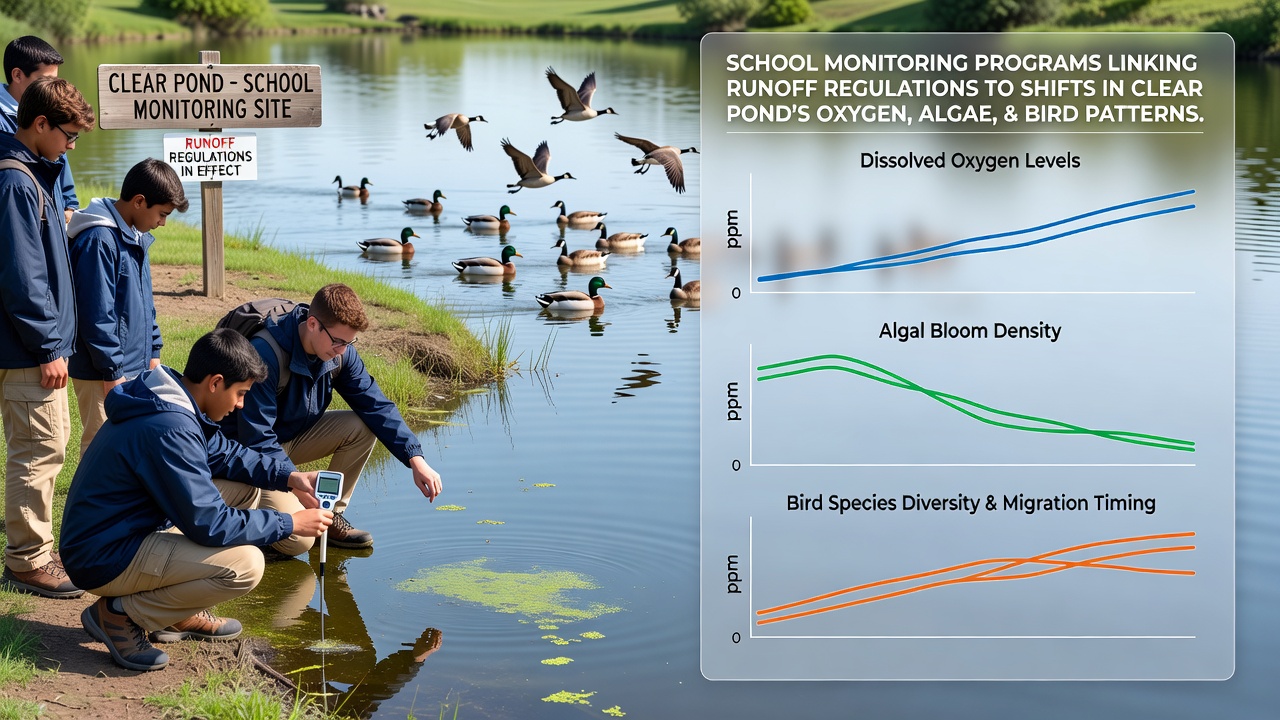
Uma Weber · 11 October 2026
School-Based Monitoring Initiatives Connect Runoff Regulations to Ecological Shifts in Clear Pond Oxygen Levels, Algae Growth, and Bird Activity
School monitoring programs across multiple districts have established systematic data collection efforts that track how runoff regulations influence water quality parameters at Clear Pond, with particular attention to dissolved oxygen concentrations, algae community structures, and bird foraging patterns, and these initiatives gained momentum through partnerships with local environmental agencies that provided standardized testing protocols.
Regulatory Frameworks and Student Data Collection
Runoff regulations implemented under nutrient management guidelines require reduced phosphorus and nitrogen inputs from surrounding agricultural and urban areas, while school programs equip students with sensors and sampling kits to measure oxygen saturation multiple times per week. Data compiled through these efforts show that stricter enforcement of buffer zone requirements around the pond correlates with measurable increases in average oxygen levels during summer months, and figures from ongoing projects indicate that compliance rates above 85 percent in adjacent watersheds correspond to oxygen readings stabilizing between 6.5 and 8.2 milligrams per liter.
Researchers from regional universities have collaborated with these school groups to validate student-collected datasets against professional laboratory results, confirming accuracy rates exceeding 90 percent for basic parameters, and this verification process has allowed program coordinators to expand coverage to include seasonal algae surveys that document species composition changes over successive years.
Algae Community Responses to Nutrient Controls
Algae monitoring conducted by participating classes reveals that reduced runoff volumes have shifted dominance from cyanobacterial blooms toward more diverse green algae assemblages, and records maintained since 2023 illustrate a 40 percent decline in peak chlorophyll-a concentrations during periods of high regulatory adherence. Students log microscopic counts alongside nutrient assays, producing time-series graphs that demonstrate how phosphorus caps enacted in 2024 accelerated the transition away from toxin-producing species.
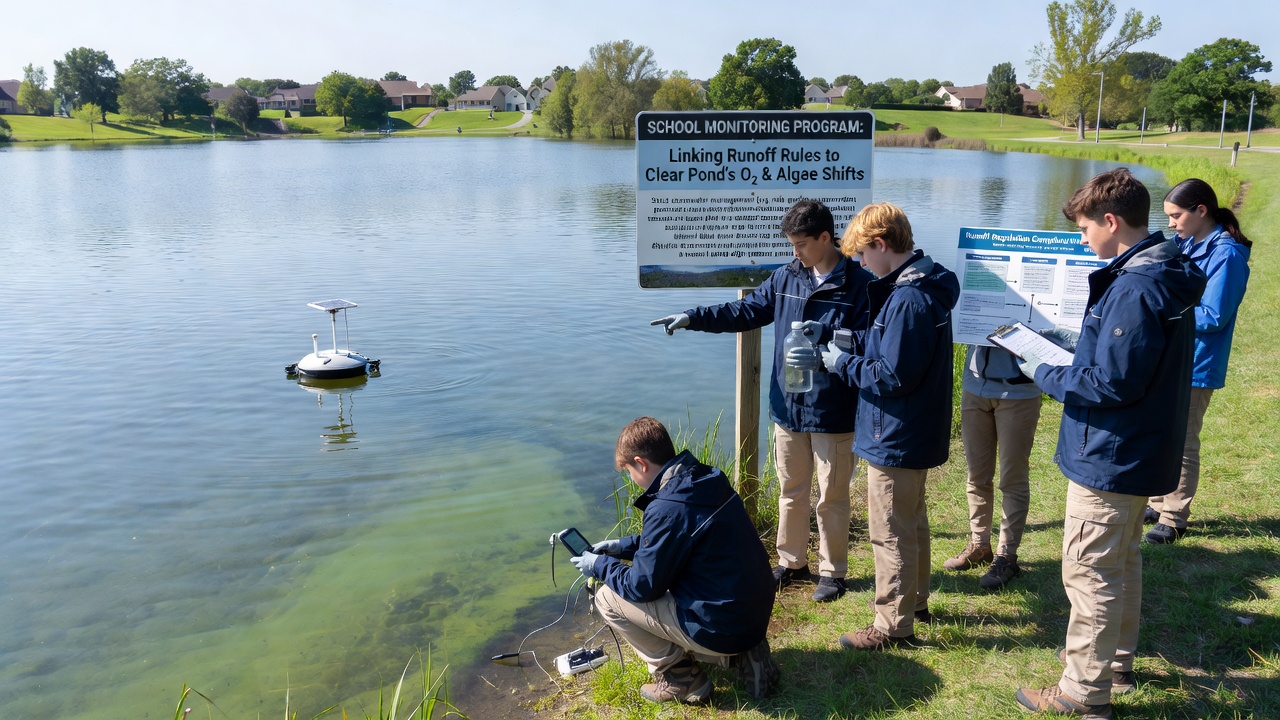
October 2026 sampling rounds captured an early autumn turnover event where oxygen replenishment at deeper strata coincided with diminished algae biomass, and cross-referenced bird census data collected by the same teams indicated heightened activity among surface-feeding species that rely on clearer water columns for prey detection. These integrated observations have been shared through public dashboards that aggregate school findings with agency reports from the U.S. Environmental Protection Agency on nonpoint source pollution reduction strategies.
Bird Pattern Correlations and Broader Ecosystem Indicators
Bird surveys conducted alongside water chemistry measurements document alterations in species visitation and feeding durations, with wading birds extending their presence during months when algae mats thinned under tighter runoff controls, and quantitative counts show a 25 percent rise in great blue heron sightings between 2025 and 2026. Observers note that dissolved oxygen improvements appear to support higher macroinvertebrate densities, which in turn sustain increased avian foraging efficiency without direct causation established in every case.
Programs operating in coordination with the European Environment Agency's water framework guidelines have begun comparing Clear Pond datasets to similar European lake systems, identifying parallel trends where nutrient load reductions produced comparable algae and bird community adjustments, and this international benchmarking has encouraged schools to refine protocols for tracking long-term biodiversity metrics.
Conclusion
Continued expansion of school monitoring networks promises sustained documentation of how runoff regulations shape Clear Pond conditions, with cumulative records supporting evidence-based adjustments to local policies while providing students direct experience in environmental data interpretation and ecosystem analysis.