Uma Weber · 22 November 2026
Student Monitoring Networks Expose Microplastic Disruptions to Freshwater Migration and Oxygen Rebound
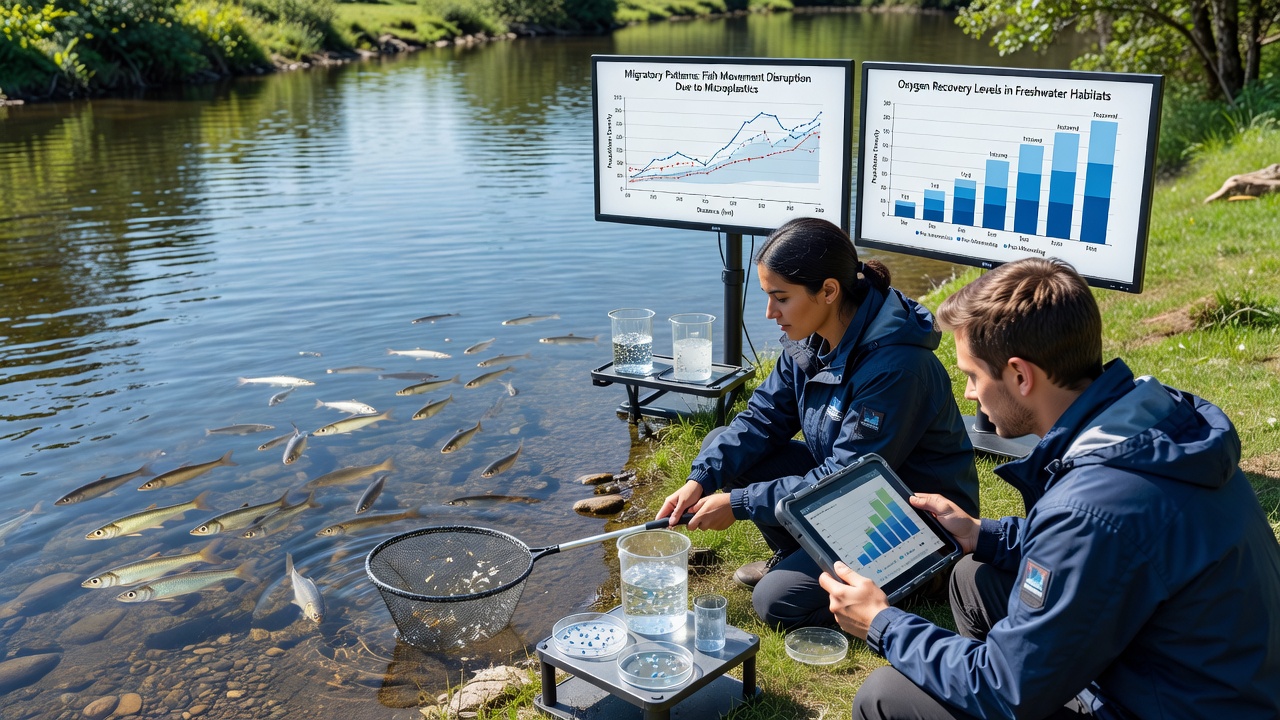
School-based monitoring programs have expanded across multiple regions since 2024, and data collected through these initiatives now links microplastic concentrations to changes in migratory routes for fish and waterfowl along with slower oxygen recovery rates in affected freshwater sites. Programs operating in North America, Europe, and parts of Australia have recorded consistent patterns where particle loads above 12 particles per liter coincide with altered movement timing and reduced dissolved oxygen rebound after seasonal low-oxygen events.
Program Structure and Geographic Reach
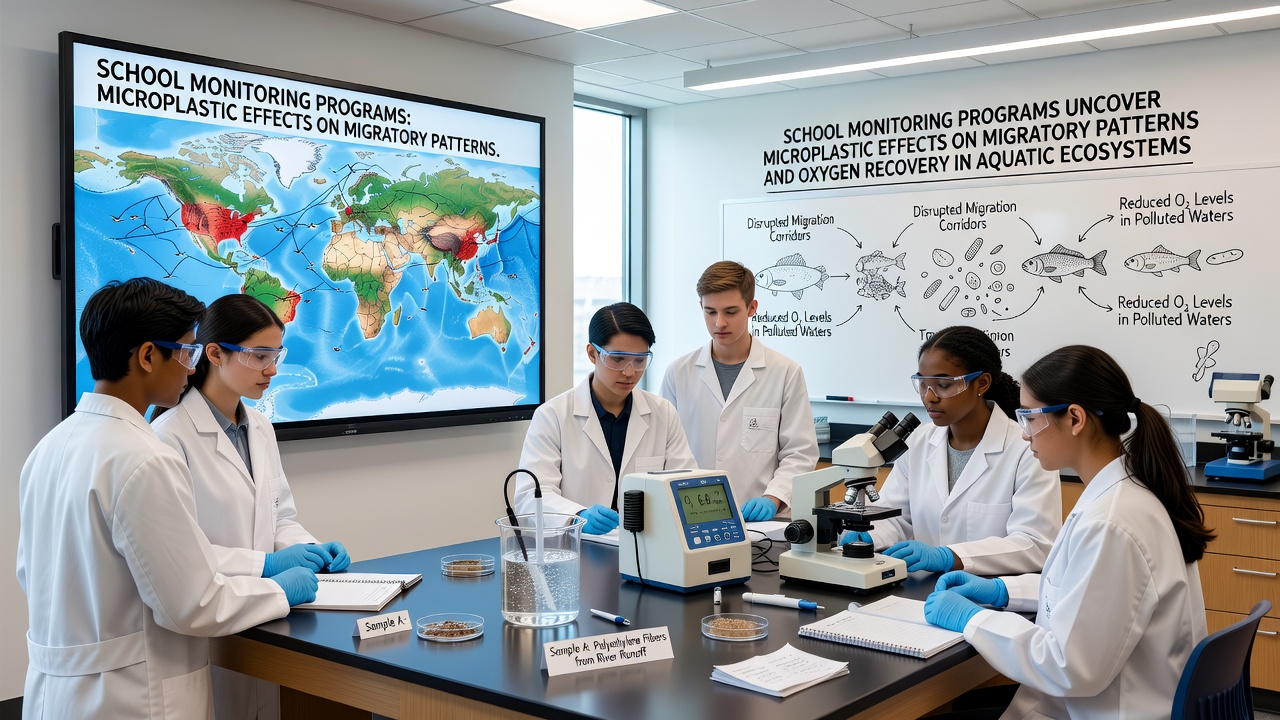
High school and university groups coordinate weekly sampling at fixed stations, measuring particle counts, water temperature, and oxygen levels while logging species sightings through standardized transects. In November 2026, teams in the Great Lakes basin reported peak microplastic influx following heavy autumn rainfall, and similar spikes appeared in data from the Rhine catchment and Murray-Darling river system. Participants upload results to shared databases that regulatory agencies and research institutes cross-reference with satellite imagery of surface debris.
Microplastic Pathways and Species Movement
Microplastics enter freshwater systems primarily through stormwater runoff carrying synthetic fibers and degraded packaging materials, and once suspended they alter water density and light penetration in ways that affect navigation cues for migratory species. Studies coordinated by the U.S. Environmental Protection Agency show that several fish populations now delay upstream movement by two to four weeks when particle densities exceed baseline thresholds, while waterfowl shift feeding areas toward clearer tributaries. Researchers tracking radio-tagged individuals note that detour routes increase energy expenditure and reduce arrival rates at traditional wintering grounds.
Oxygen Recovery Patterns
Dissolved oxygen levels in monitored ponds and streams typically rebound within seven to ten days after turnover events, yet sites with elevated microplastic loads show recovery stretching to eighteen or twenty days. The delay occurs because particles provide surfaces for bacterial films that accelerate organic matter decomposition and consume additional oxygen during the process. Data compiled by the European Environment Agency indicates that recovery timelines lengthen proportionally with particle surface area, and repeated low-oxygen intervals compound stress on benthic invertebrates that serve as food for migratory fish.
Integration of School Data with Regulatory Records
School datasets now feed directly into state and national reporting systems, supplying higher spatial resolution than traditional agency sampling alone can achieve. In the Canadian provinces of Ontario and British Columbia, student-collected oxygen profiles helped identify two previously undocumented recovery lag zones that prompted targeted sediment removal trials. Australian monitoring networks similarly contributed particle distribution maps that informed updates to stormwater filtration standards along the Murray River corridor.
Cross-validation exercises compare student readings against professional laboratory results and show agreement within five percent for particle counts and within three percent for dissolved oxygen measurements when protocols remain consistent. These alignments have encouraged additional districts to adopt the same methods, expanding coverage to more than 180 sites across three continents by late 2026.
Species-Specific Observations
Observers tracking American eels and European eels report that individuals encountering dense particle plumes pause or reverse direction more frequently, and similar hesitation appears in data for several duck species that normally stage at nutrient-rich shallows now clouded by suspended plastics. Invertebrate drift samples collected downstream of urban inputs contain higher proportions of microplastic-laden organisms, altering the nutritional quality available to higher trophic levels during migration windows.
Conclusion
School monitoring programs continue to supply granular, geographically diverse records that connect microplastic presence to measurable shifts in migration timing and oxygen rebound duration across freshwater habitats. The accumulated datasets support ongoing refinement of runoff controls and particle-capture infrastructure while training new generations of field researchers in standardized measurement techniques. Continued coordination between educational networks and regulatory bodies promises further clarification of these relationships as coverage widens into additional watersheds.